

Last Updated: November 11, 2026
Quick Summary
Good home accessories are the finishing touches that make a room feel complete, such as lamps, cushions, rugs, mirrors and shelving. Start by deciding on the room's main colours and largest furniture, then choose accessories that repeat one or two of those colours. Choose functional pieces first, then add a few decorative ones, since too many small items can look cluttered.
- Start with the largest pieces, then choose accessories that repeat one or two colours already in the room.
- Choose functional pieces first, because they earn their place every day, then add decorative ones to fill gaps.
- Measure the space before buying, and leave at least 90 cm of clear walkway where you can.
- Choose one or two finishes for the room and repeat them, since mixing many finishes can look busy.
- Set a budget for the whole room and spend more on everyday items like lighting and storage.
Table of Contents
- What Home Accessories Do for a Room
- Decorative Versus Functional Accessories
- How to Style Home Accessories Room by Room
- Choosing Sizes, Materials and Finishes That Last
- Home Décor Trends Worth Following in 2026
- Setting a Budget and Checking Online Shops Before You Buy
- Your Next Step: Pick One Room and Start a Shortlist
- Frequently Asked Questions
Home accessories are the finishing touches that make a room feel complete. A lamp, a shelf of books, a throw over a chair, or a mirror on the wall can change how a space feels. At NEXZI, we have put together this home accessories buying guide to help you choose pieces that look good and last. You will find practical tips on style, size, materials, budget and online shopping.
What Home Accessories Do for a Room
Home accessories are the smaller objects that add personality and function to a room. They include lamps, cushions, rugs, mirrors, vases, clocks, shelving and wall art.
A common mistake is buying accessories before deciding on the room's main colours and furniture. Start with the largest pieces, then choose accessories that repeat one or two of the colours already in the room.
- Accessories add warmth and texture to hard surfaces
- They give light at different heights, not just from the ceiling
- They show personal taste and the things you value
Decorative Versus Functional Accessories
Decorative accessories are pieces you mainly look at, such as ornaments, art and vases.
The best rooms usually mix both. Choose functional pieces first, because they earn their place every day, then add decorative ones to fill gaps.
Watch out: buying too many small decorative items can make a room look cluttered. Pick a few larger pieces instead of many small ones.
How to Style Home Accessories Room by Room
Every room has its own needs. Styling works best when you think about how you use each space, then apply a few repeatable rules for height, quantity and placement.
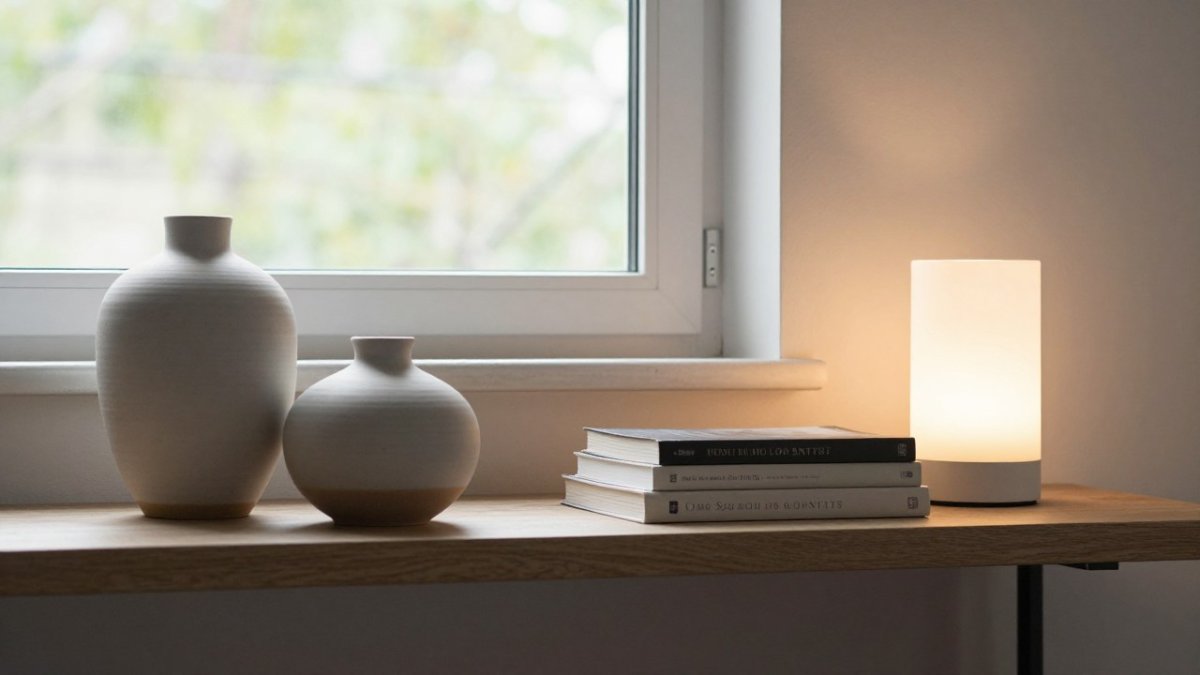
A calm living room with a styled shelf holding a few ceramic vases, a stack of books and a small LED lamp, natural daylight from a window
Living Room Accessories
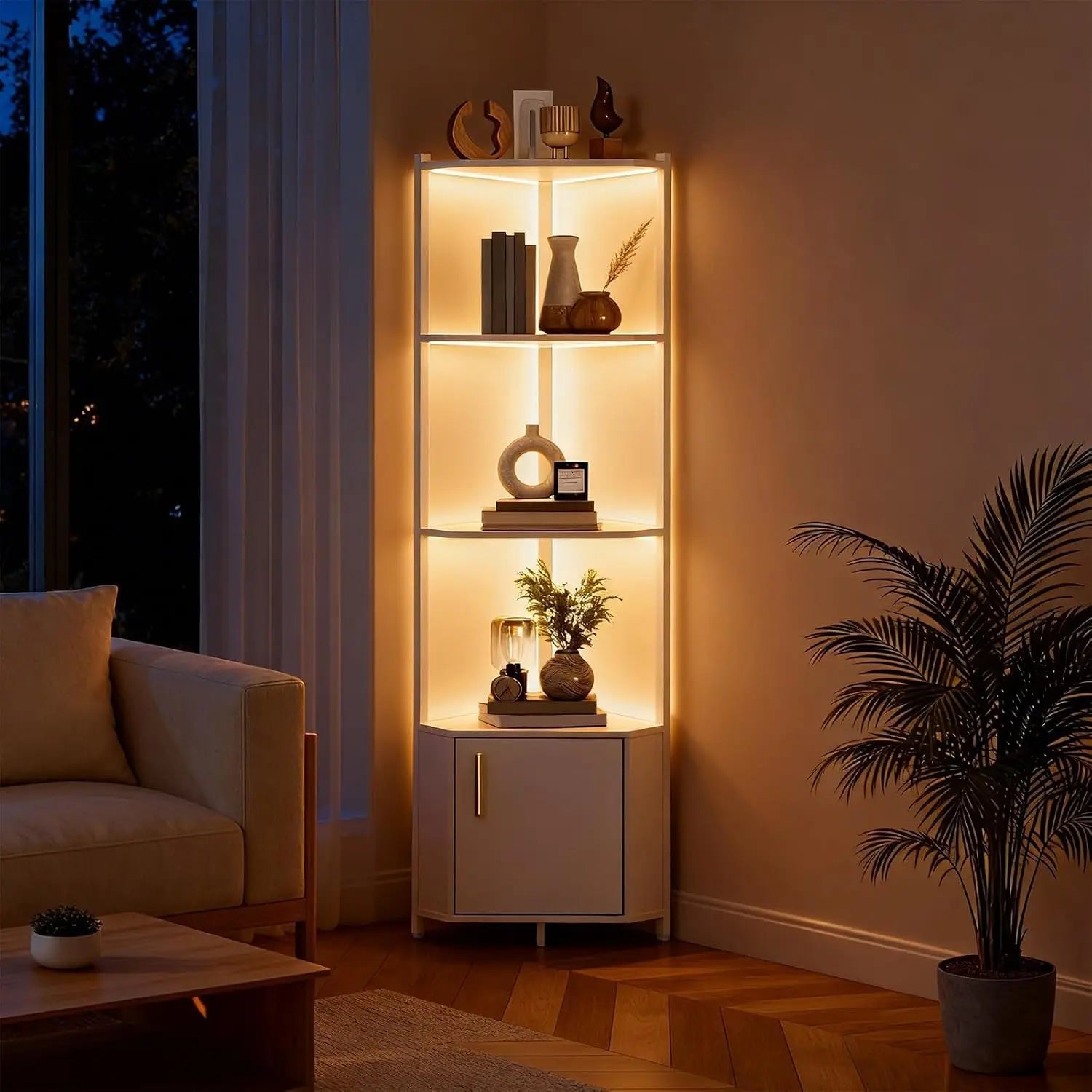
In the living room, start with one focal point, such as a shelf or a large mirror, and build around it. A 5-Tier Corner Display Shelf with Dimmable LED Lighting gives you storage and display in one corner, which suits smaller living rooms well.
Use these working numbers as a starting point:
- Rug: leave at least 20-30 cm of floor visible around the edges, and make sure the front legs of the sofa sit on the rug so the seating area reads as one zone.
- Cushions: two to three on a two-seater and three to five on a three-seater is usually enough; mix one larger square (around 50 cm) with two smaller ones (around 40-45 cm).
- Throw: one folded throw over an arm or the back of the sofa adds texture without clutter.
Keep a balance of heights. Place tall items at the back and smaller items at the front so each piece can be seen.
Bedroom Accessories
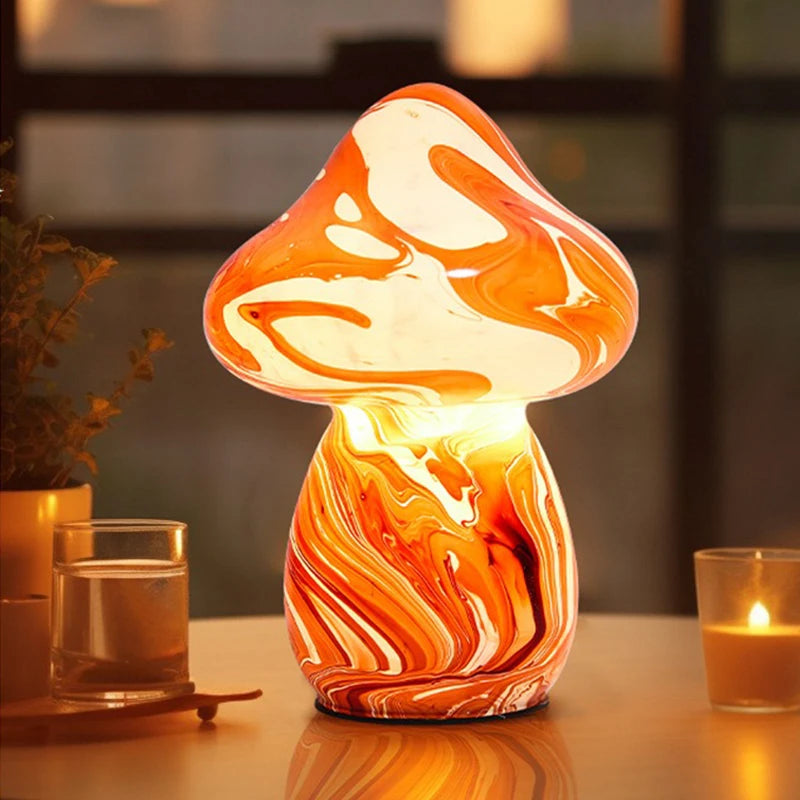
In the bedroom, lighting and calm colours matter most. A Dimmable LED Mushroom Table Lamp with Touch Control works well on a bedside table, because you can adjust the brightness for reading or winding down. Keep bedside surfaces clear, with one lamp, one small object and a glass of water.
Practical placement rules for the bedroom:
- Bedside lamp: the shade should sit roughly level with your shoulder when you are sitting up in bed, so the light falls on a book rather than into your eyes.
- Bedside table: allow at least 10-15 cm between the edge of the table and the side of the mattress so you can reach the lamp without stretching.
- Art above the bed: leave 15-25 cm between the top of the headboard and the bottom of the frame, and keep the width to roughly two-thirds of the bed width for balance.
- Curtains: hang the rail 10-15 cm above the window recess and let the curtains reach the floor or just below the sill, which makes the window look taller.
For more ideas on lighting for each room, read our room-by-room buying guide to lamps.
Kitchen and Dining Accessories
Kitchen and dining accessories earn their place by being useful first. A Two-Tier Dish Drainer Rack keeps washing-up off the worktop and frees up prep space, which matters in a small kitchen. On the dining side, a simple centrepiece, a set of coasters and a couple of candles are usually enough.
Use these rules to keep the room working:
- Worktop: leave at least 60 cm of clear prep space on either side of the sink or hob before adding storage accessories.
- Dish drainer: place it within arm's reach of the sink, and check that the tray clears the worktop edge by a few centimetres so water does not run onto the floor.
- Dining table: a centrepiece should be no taller than about 30 cm so people can see across the table, and it should leave at least 60 cm of place setting space per person.
- Candles: keep them at least 30 cm from anything flammable, never leave them unattended, and place them out of the reach of children and pets.
Hallway and Small Spaces
Hallways are often the most overlooked space. A narrow console, a mirror and a hook or two can turn a bare passage into a useful landing spot. Keep the walkway at least 90 cm wide where possible, and choose a mirror that reflects light rather than a dark wall. In rented homes, use freestanding or over-door pieces and removable adhesive hooks so nothing is drilled into the wall.
A Quick Room-by-Room Checklist
Before you buy for any room, note down:
- The room's main dimensions and the width of walkways.
- The main colours and the one or two finishes you are repeating.
- The three pieces the room needs most, in order of daily use.
- The quantities you need (cushions, throws, lamps) based on the numbers above.
Working through one room at a time with these numbers keeps the styling practical rather than purely inspirational.
Choosing Sizes, Materials and Finishes That Last
Size is one of the most common reasons accessories look wrong.
Use these working measurements as a guide:
- Shelf depth: 20-30 cm is enough for books, vases and small objects without projecting too far into a walkway.
- Shelf height spacing: allow 30-40 cm between shelves for books and taller vases, and 20-25 cm for small ornaments.
- Table lamp: the shade should be roughly one-third of the height of the surface it sits on, and the base should cover no more than about half the table's width.
- Wall mirror or art: width should be roughly two-thirds to three-quarters of the width of the furniture below it, and the centre should sit around 145-155 cm from the floor.
Materials affect how long an accessory lasts and how much care it needs. Metal frames, solid wood shelves and ceramic pieces tend to hold up well to everyday use.
Match the material to the household:
- Homes with children or pets: choose wipe-clean finishes, rounded edges, and rugs with a short pile or a washable cover. Avoid glass-topped tables and tall, narrow vases on low surfaces.
- Heavy-use rooms: ceramic and stone resist scratches, but check that the base is felt-padded so it does not mark shelves. Metal should be powder-coated rather than painted, as powder coating chips less.
- Humid rooms such as kitchens and bathrooms: avoid untreated wood and unsealed metal, which can swell or rust. Sealed ceramic and glass are easier to keep clean.
- Soft furnishings: check the care label before buying. Cushion covers that can be removed and washed at 30°C are far easier to live with than dry-clean-only fabrics.
Finishes should match your other pieces. For more on clocks as a long-lasting piece, see our guide to the best clocks for home decor.
Safety and accessibility matter as much as looks.
Home Décor Trends Worth Following in 2026
Current home décor leans towards natural materials, warm lighting and simple shapes. Many people are choosing wood, linen and stone over glossy, bright finishes. Soft, layered lighting from lamps is also popular, because it makes evenings more comfortable.
Trends are a guide, not a rule. Follow the ones that suit your room and your daily routine, and skip the ones that do not.
Setting a Budget and Checking Online Shops Before You Buy
Set a budget for the whole room before you start shopping, then decide which pieces matter most. Spend more on items you use every day, such as lighting and storage, and less on small decorative extras.
Before you pay for anything, check the shop. Read our guide on how to identify secure online shops for more checks you can make.
Compare prices across the items you want before you buy. Prices in our range include:
| Product | Price | Best for |
|---|---|---|
| Corner Display Shelf with LED lighting | £49.99 | Small living rooms and display |
| Two-Tier Dish Drainer Rack | £34.99 | Kitchen storage |
| Dimmable LED Mushroom Table Lamp | £29.99 | Bedrooms and reading |
| Flame-Effect Tabletop Mist Humidifier | £39.99 | Cosy bedrooms and living rooms |
Price
Pick the pieces that fit your budget and your room, and leave the rest for later.
Your Next Step: Pick One Room and Start a Shortlist
Choose one room to finish first. Write down its size, its main colours and the three pieces it needs most, such as a lamp, storage and a mirror.
Starting with one room keeps the task manageable and gives you a finished space sooner. Browse our 5-Tier Corner Display Shelf with Dimmable LED Lighting and other pieces on the NEXZI site to start your shortlist today.
Frequently Asked Questions
How do I choose home accessories for my style?
Start with the pieces already in the room. Look at the dominant colours, the wood tones and the metals, then pick accessories that repeat at least two of them. Choose three or four colours at most, and keep one or two statement pieces so the room has a clear focal point. Buy one piece at a time and live with it for a week before adding the next. This prevents the common problem of a room that looks busy rather than deliberate, and it makes it easier to tell whether a new accessory actually suits the space.
How do I choose the right size accessories for a room?
Measure the surface or wall before you shop. A good rule is to leave a clear margin around any accessory, so a shelf or console should hold objects that take up roughly two-thirds of its length at most. For wall décor, a single large piece often works better than several small ones spread apart. Check the height of lamps and vases against the furniture beside them. Write the measurements on your phone or a note so you can compare them with product dimensions before you order.
How many accessories should you have in a room?
There is no fixed number, but most rooms look more finished with a small group of accessories grouped in odd numbers on each surface, such as three objects on a side table or five on a shelf. Leave some empty space so the eye can rest. If a room feels cluttered, remove one item from each surface and look again. Lamps, cushions and a rug are often enough to make a living room feel complete before any ornaments are added.
What materials are best for home accessories?
The right material depends on where the item will sit. Ceramics, metal and solid wood handle daily handling well, while thin glass and some painted finishes chip more easily. In a kitchen or bathroom, choose materials that tolerate moisture and cleaning. Check the care instructions on each product page and avoid mixing finishes that may wear unevenly. Durable materials cost a little more at the start but usually last longer than cheap alternatives that need replacing within a few months.


