

Last Updated: November 6, 2026
Quick Summary
The best craft kits for adults are well made, sized for the time you have, and pitched at the skill level printed on the box. Check the contents list first, since some kits need extra purchases. Beginner kits usually take one to three hours of active work plus drying time.
- Check whether the kit includes all tools and materials, or whether you must buy extras.
- Look for step-by-step instructions with photographs, sturdy materials and a realistic time estimate.
- Confirm the stated time covers drying, setting and finishing, not just the making stage.
- Match the finished size and difficulty to where the piece will go and how much free time you have.
- Start with one beginner-friendly project, then move on to something more ambitious.
Table of Contents
- What Makes a Good Craft Kit for Adults
- Adult Craft Kits for Beginners: What to Expect
- Unusual Craft Kits for Adults Worth Trying
- Needle Felting Kits for Adults: Materials and Skill Level
- Embroidery Kits for Adults: Time, Price and Finished Size
- Comparing Kits: Price, Time, Skill and Included Materials
- Choosing Your Next Kit and Getting Started at NEXZI
- Frequently Asked Questions
What Makes a Good Craft Kit for Adults
A good craft kit for adults gives you everything needed to finish the project, with clear instructions and materials that work the way they should. The best kits are well made, sized for the time you have, and pitched at the skill level printed on the box.
Start by checking what the kit includes. Some sets supply every tool and material, while others expect you to source paint, thread or clay separately. Read the contents list carefully before you compare prices, because a cheaper kit that needs extra purchases can cost more in the end.
Look for three things before you buy. First, clear step-by-step instructions with photographs. Second, materials that feel sturdy rather than flimsy. Third, a realistic time estimate. A kit that promises a finished piece in an hour will usually leave you frustrated.
Quality matters more than you might expect. Well-made tools and consistent materials make the difference between a project you enjoy and one you abandon halfway through.
Adult Craft Kits for Beginners: What to Expect
If you are new to crafting, expect a kit to teach you one core technique and let you finish something visible in a single session. Beginner kits typically take between one and three hours of active work, plus any drying or setting time the instructions specify. The instructions do most of the work, but the pace is set by you.
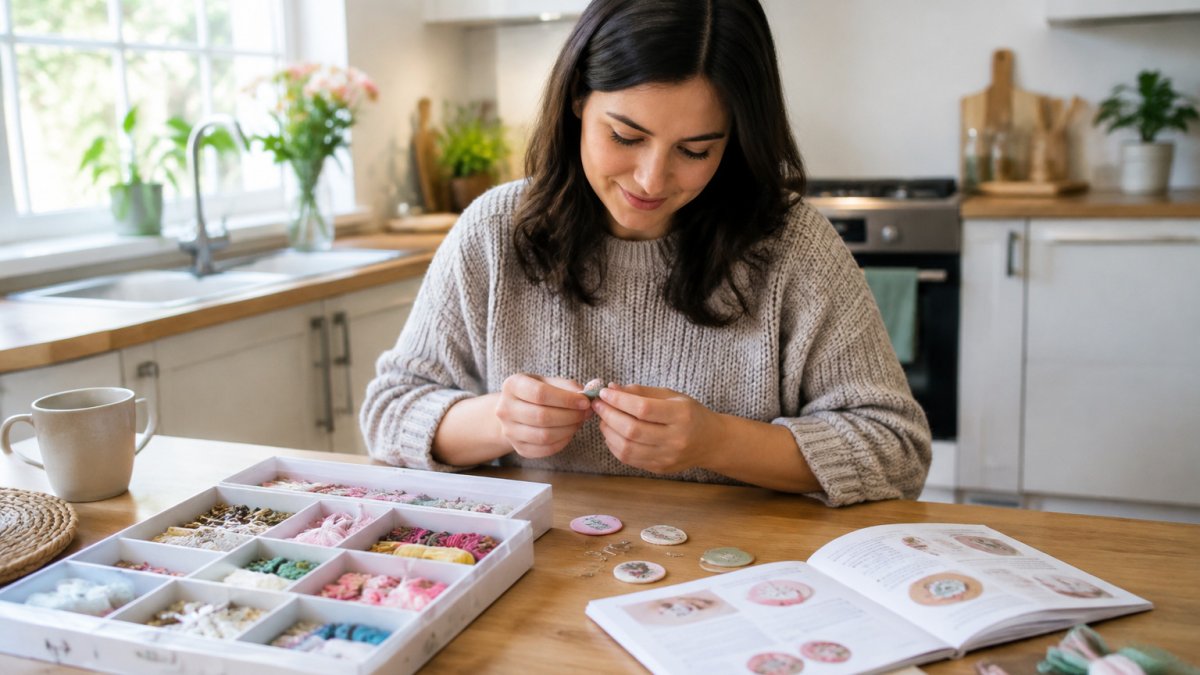
Most beginner kits follow a simple pattern: prepare your workspace, follow the numbered steps, then let the piece dry or set before handling it. Rushing the drying stage is the most common reason first projects go wrong, so give materials the time the booklet recommends. A common pattern is to break a session into three parts: set-up and reading the instructions, the main making stage, then finishing and clean-up, which makes it easier to judge whether a kit fits the evening you have.
Set realistic expectations for the result. A first piece rarely looks like the photograph on the box, and that is normal. Each project builds the small skills you need for the next one. Finished dimensions matter here too: a small hoop, a single figure or a compact display piece is a more satisfying first result than a large panel that takes weeks to complete.
Beginners should also think about workspace and physical demand before choosing. Some crafts need a flat, wipe-clean surface and good light; others are low-mess and can be done on a lap tray. If you have limited dexterity or grip strength, look for kits with larger tools, pre-cut pieces or simpler fastenings, and check the recommended age and skill guidance on the packaging.
Watch out: beginner kits that promise a finished piece in under an hour often skip the drying, setting or finishing stage. Check the stated time includes the whole process, not just the making, or you may find the project spills into a second day.
A short decision guide helps if you are unsure which craft to try. Ask what outcome you want: a display piece, a wearable or usable item, a gift, or a relaxing repetitive task. Then match that to a craft: embroidery and needle felting for display pieces, knitting and crochet for wearable and usable items, printmaking and resin for gifts and unusual results.
!An adult sitting at a tidy kitchen table with a craft kit's contents laid out in neat compartments, a printed instruction booklet open beside them, soft daylight from a window
Unusual Craft Kits for Adults Worth Trying
Beyond traditional crafts, there are offbeat kits that appeal to adults who want something different. Miniature building projects, resin art and moss-based displays all fall into this category, and each offers a distinct way to spend an afternoon.
Miniature and model-building kits suit people who enjoy precision. Check the recommended age and skill guidance on the packaging before you start.
Magnetic track and train sets are another playful option. They reward experimentation, since you can rearrange sections into new layouts. Follow the manufacturer's assembly and safety guidance, as magnets and small parts need careful handling.
Pick an unusual kit based on the result you want. A display piece, a working toy or a relaxing repetitive task each suits a different mood, so choose the one that matches why you want to craft in the first place.
Needle Felting Kits for Adults: Materials and Skill Level
Needle felting shapes wool fibres into solid forms by repeatedly pushing barbed needles through the fleece. It is one of the more accessible crafts for adults, but it does require care with the needles.
A typical kit contains dyed wool roving, felting needles of varying gauge, a foam pad and a pattern guide. Thicker needles shape the outline quickly, while finer needles add detail. Always work on the foam pad and keep your fingers clear of the needle path.
Skill level depends on the project. Simple shapes such as balls and beads suit beginners, while figures with fine detail take considerably longer. Check the kit's stated difficulty and pick a project that matches your experience.
Watch out: felting needles are very sharp and barbed. Keep them away from children and pets, and store them in their case when not in use.
Embroidery Kits for Adults: Time, Price and Finished Size
Embroidery kits vary widely in cost and in the time needed to finish them. A small hoop design can be completed in a few evenings, while a larger panel may take several weeks of regular stitching.
Compare the finished size before you buy. A kit's listed dimensions tell you how large the piece will be once framed, which helps you decide where it will hang. Smaller designs are usually quicker and cheaper, making them a good first choice.
Most embroidery kits include fabric, a hoop, thread and a printed or transferred pattern. Check whether the thread colours match the pattern and whether you need any extra tools, such as a small pair of scissors.
Match the kit's size and difficulty to the recipient's interests and free time.
Comparing Kits: Price, Time, Skill and Included Materials
The table below turns the five decision factors into concrete checks you can run against any kit listing. Use it to narrow your options before you compare specific products.
| Factor | What to check | Typical range to expect | Why it matters |
|---|---|---|---|
| Price | Total cost including any extras and refills | Budget, mid-range and premium tiers exist across every craft | Hidden purchases can raise the final cost well above the listed figure |
| Time | Stated hours to finish, plus drying or setting time | Short evening projects through to multi-weekend builds | Stops you choosing a project you cannot complete |
| Skill level | Beginner, intermediate or advanced, as printed on the box | Beginner kits usually assume no prior experience | Prevents frustration and wasted materials |
| Materials | Whether tools and supplies are included or sold separately | Complete kits include needles, hoops, pads or brushes; others do not | Determines whether you need to buy more before you start |
| Finished size | Dimensions of the completed piece | Small hoops and figures through to large display panels | Helps you plan where it will be displayed |
Work through these five factors in order. Price and time usually narrow the field quickly, and skill level and included materials help you decide between the final options.
A complete-kit checklist saves the most surprises. Before buying, confirm the listing states that the kit includes: the core material (wool roving, fabric and thread, clay, resin or paint), the tools needed to work it (needles, hoops, pads, brushes, moulds), any pattern or instruction booklet, and any finishing supplies such as frames, glue or display stands. If any of those are missing, add their cost and sourcing time to your comparison.
Watch out: a kit described as "everything you need" sometimes excludes scissors, a ruler, a water pot or a frame. Those small extras are cheap individually but add up, and they can delay a project if you have to order them separately.
Keep in mind that a kit's listed price is only the start. Refill supplies, such as extra wool, thread or clay, may be needed for future projects, so consider those costs if you plan to keep crafting. Reusable tools, a foam pad, a hoop, a set of needles, carry over between projects, which lowers the effective cost of your second and third kits.
Two further factors are worth checking because they are easy to overlook. First, accessibility and physical demand: some crafts need sustained fine grip, steady hands or standing at a workbench, while others can be done seated with larger tools. If dexterity or workspace is a constraint, look for low-mess options such as embroidery, paper crafts or projects that contain their own tray or mat. Second, sustainability: check whether packaging is recyclable, whether materials are natural or recycled, and whether supplies can be refilled rather than replaced. These details are rarely prominent in listings, so they reward a closer read of the product description.
Choosing Your Next Kit and Getting Started at NEXZI
Choosing your next kit comes down to three questions: how much time you have, what skill level suits you, and what result you want to display or give away. Answer those first, then compare the options that fit.
At NEXZI, we curate a range of lifestyle and utility products. You can also explore our miniature LCD writing and drawing tablet for quick sketching and notes between projects.

Our magnetic track building set with electric train offers a playful building project for adults who enjoy hands-on construction. Browse our gadgets collection to find more ideas for your next creative project.
Start small. Choose one beginner-friendly project, finish it, then move on to something more ambitious. Each completed project builds confidence and the skills you need for the next challenge.
Frequently Asked Questions
What are the best craft kits for adults?
The best craft kit depends on what you want to make and how much time you have. Beginner-friendly sets with clear step-by-step instructions suit most first-time crafters, while detailed projects suit people who already have some experience. Compare the skill level, the time a project takes, what is included in the box and whether you will need to buy extra materials. Reading the finished-item size before you buy also helps you judge whether a kit will give you a satisfying result.
What craft kits are good for beginners?
Adult craft kits for beginners usually include all the materials needed for one project, a simple instruction booklet and a clear finished-item size. Needle felting, simple embroidery and small painting kits are common starting points because they need few tools and little space. Look for kits that state the approximate time a project takes, so you can plan a session that fits your evening. Starting with a small project lets you learn the basic techniques before you commit to a larger kit.
Are craft kits suitable for experienced crafters?
Yes. Experienced crafters often choose kits with more pieces, finer detail or techniques they have not tried before, such as advanced embroidery or detailed needle felting. These kits typically take longer and cost more per project. Check whether the kit supplies everything needed or whether you will need to buy extra threads, wool or tools. Kits can also work well as a way to try a new technique without buying a full set of supplies.
How do I choose a craft kit for my skill level?
Match the kit to your current experience rather than to the picture on the box. Beginners should look for kits with written step-by-step instructions, a small number of techniques and a realistic completion time. If you have done similar crafts before, a more detailed kit will keep you engaged. Read the product description for the skill level and included materials, and check the time estimate against the free evenings you actually have.


