

Last Updated: October 27, 2026
Quick Summary
Quality utility products are worth the money because they do the job reliably, safely and for years, while cheap alternatives loosen, crack or stop fitting and quietly cost you more in replacements and time. Buy quality where failure is costly, frequent or hard to fix, and buy economically where the item is low-risk, rarely used and easy to replace.
- A utility product is worth buying when it works reliably, safely and for years, not just on unboxing day.
- Check fabric denier, reinforced base panels, alloy or plastic type and food-safe markings before you pay.
- A product with a replaceable worn part can outlast a sealed, unserviceable design by years.
- An item used daily justifies a higher upfront price because cost per use falls quickly.
- Cheap alternatives often need two or three replacements over three years, making real cost per year higher.
Table of Contents
- What Makes a Utility Product Worth Buying
- The Benefits of Quality Products That Cheap Alternatives Miss
- How to Choose Durable Products Before You Buy
- Quality Versus Price When Shopping: What the Extra Cost Buys
- Total Cost of Ownership: The Long-Term Value of Quality Utility Products
- Useful Everyday Gadgets: How Quality Varies by Use Case
- Repair, Sustainability and End-of-Life: The Hidden Side of Quality
- Choosing Your Next Utility Product with Confidence
- Frequently Asked Questions
What Makes a Utility Product Worth Buying
A utility product is worth buying when it does its job reliably, safely and for years, not just on the day you unbox it. That test explains why choose quality utility products matters more than chasing the lowest price. This guide covers the real benefits of quality products, how to choose durable products, and where cheap alternatives quietly cost you more.
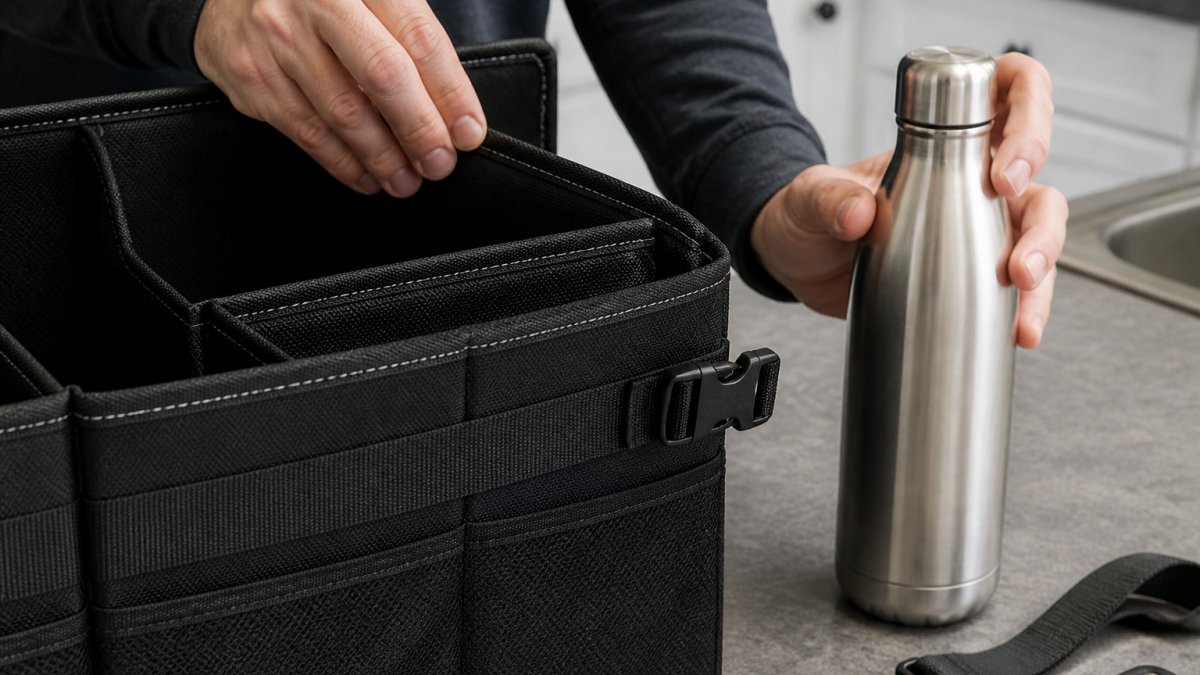
Product utility is the practical value an item delivers against a real need, from a car boot organiser that stays rigid to a water bottle that does not leak in a gym bag.
Cheap items rarely fail all at once. They loosen, crack or stop fitting properly, and you stop trusting them. That slow decline is the real cost, here is how to spot the difference before you pay.
The Benefits of Quality Products That Cheap Alternatives Miss
The biggest benefit of quality products is not luxury.
A common mistake is judging value by the shelf price alone.
How to Choose Durable Products Before You Buy
To choose durable products, check materials, fixings, seals and warranty terms before you pay. Evidence beats marketing claims every time.
Step 1: Read the materials list, not the marketing copy
For soft goods such as boot organisers and bags, check the denier of the fabric and whether the base panel is reinforced. For hard goods such as bottles and tools, check the alloy or plastic type and whether food-contact or skin-contact parts carry a recognised food-safe marking.
Step 2: Inspect construction, not just components
Run your hands over the item and flex the joints gently. A product that creaks, shifts or feels loose in the shop will feel worse after a year of use.
Step 3: Check performance and safety evidence
If a claim has no number behind it, treat it as a design intention rather than a tested property.
Step 4: Confirm repairability and spare parts
A durable product is one you can keep working. Before buying, check whether the seller offers replacement straps, pads, seals, inserts or fixings; a product with a replaceable worn part can outlast a sealed, unserviceable design by years. Ask three questions: can it be cleaned rather than discarded, can the worn part be swapped, and does the seller stock that part? If all three answers are no, the product is disposable by design, whatever the marketing says.
Step 5: Read the returns policy and warranty terms
Check the returns policy and warranty terms before buying.
Quality Versus Price When Shopping: What the Extra Cost Buys
Paying more does not automatically mean a better product. The useful question is not "is expensive better?" but "what specifically does the extra money pay for, and is that worth it for how I will use this item?"
What the extra cost usually buys
Price is a signal, not a guarantee. If the extra money pays for "a brand name", walk away; if it pays for stronger fixings, a tested seal and a proper returns policy, that is real value.
A decision framework for quality versus low cost
Use this three-question test before choosing between a cheaper and a better-made option:
1. How often will I use it?
An item used daily justifies a higher upfront price because the cost per use falls quickly. An item used twice a year may not.
2. What happens if it fails?
3. Can I repair or replace the worn part?
When the cheaper option is the right choice
Quality is not always the answer.
The mistake is not buying cheap. It is buying cheap repeatedly for the same job and never adding up the replacements.
Where the real cost hides
The shelf price is only the first number. The full cost includes replacements, return admin, time lost to failures and the cost of the failure itself, a cheap item that fails at the wrong moment can cost far more than the price difference. Our roundup of the best online stores for unique gadgets compares stores on delivery, returns and reliability.
Total Cost of Ownership: The Long-Term Value of Quality Utility Products
| Cost Factor | Cheap Alternative | Quality Utility Product |
|---|---|---|
| Upfront price | Lower | Higher |
| Replacements over 3 years | Two or three | Usually none |
| Returns and refund admin | Frequent | Rare |
| Time lost to failures | Regular | Minimal |
| Real cost per year | Often higher | Often lower |
Useful Everyday Gadgets: How Quality Varies by Use Case
"High quality" is not one fixed standard, it is fitness for a specific job. Browse our collection of gadgets to see real examples of utility products across different use cases.
Repair, Sustainability and End-of-Life: The Hidden Side of Quality
Under UK consumer law, goods must be of satisfactory quality and fit for purpose, and the Citizens Advice guidance on faulty goods explains your rights if something fails early. Buying from a seller with a clear returns process makes those rights far easier to use.
The Waste and Resources Action Programme works on reducing product waste, and longer-lasting goods sit at the heart of that effort.
Choosing Your Next Utility Product with Confidence
At NEXZI, every order includes free shipping, a 30-day free returns policy and 100% secure payments with SSL encryption. You can also compare secure payment methods for online shopping to protect your money at checkout. Before you buy, learn how to identify secure online shops so you can order with confidence. Our customers rate us 5.0 platform-wide.
Frequently Asked Questions
How can you tell whether a utility product is good quality?
Check the materials and construction before anything else: thick stitching, metal rather than brittle plastic hinges, and weight that feels solid rather than hollow. Look for clear care instructions and a stated returns window, which signal the seller stands behind the item. Read reviews that mention how the product held up after months of use, not just first impressions. A short warranty or free returns policy also gives you a low-risk way to test quality for yourself.
Are higher-quality products worth the extra cost?
Often yes, because the saving on a cheap item is usually cancelled out by replacing it. A boot organiser that falls apart in months means buying again, plus the time and hassle of returns. Quality utility products also perform better day to day: lids that seal, straps that hold, cases that protect. The calculation changes by use case, so judge each purchase on how often you will use it and how much failure would cost you.
What should you check before buying a gadget or practical accessory?
Confirm the dimensions fit your actual space, whether it is a car boot, desk or bag. Check what the product is made from and whether spare parts or replacements are available. Read the returns policy and delivery terms so you know your options if it does not suit. Finally, match the product to your routine: a useful everyday gadget should remove a step from your day, not add one.
How does product quality affect durability and value for money?
Better materials and construction directly extend how long an item lasts, which lowers its cost per year of use. A product that survives three years of daily handling costs less over time than three cheap replacements. Durability also protects the things the product holds, such as a laptop or phone, where a failure could cost far more than the accessory itself. Value for money is therefore about lifespan and performance, not the sticker price alone.
The real test of any utility product is whether you would buy it again. We built NEXZI around that idea, with a curated range of automotive storage, hydration and device accessories, free shipping, free returns within 30 days and SSL-encrypted checkout. Get started with NEXZI and choose practical items you will still be using next year.


