

Last Updated: November 2, 2026
Quick Summary
LED lighting uses light-emitting diodes to convert most of the electricity it draws into light rather than heat, which means lower running costs, cooler fittings and a long working life. The best ideas layer ambient, task and accent light in each room, and match colour temperature to the space: 2700K to 3000K for living rooms and bedrooms, 3500K to 4000K for kitchens and bathrooms.
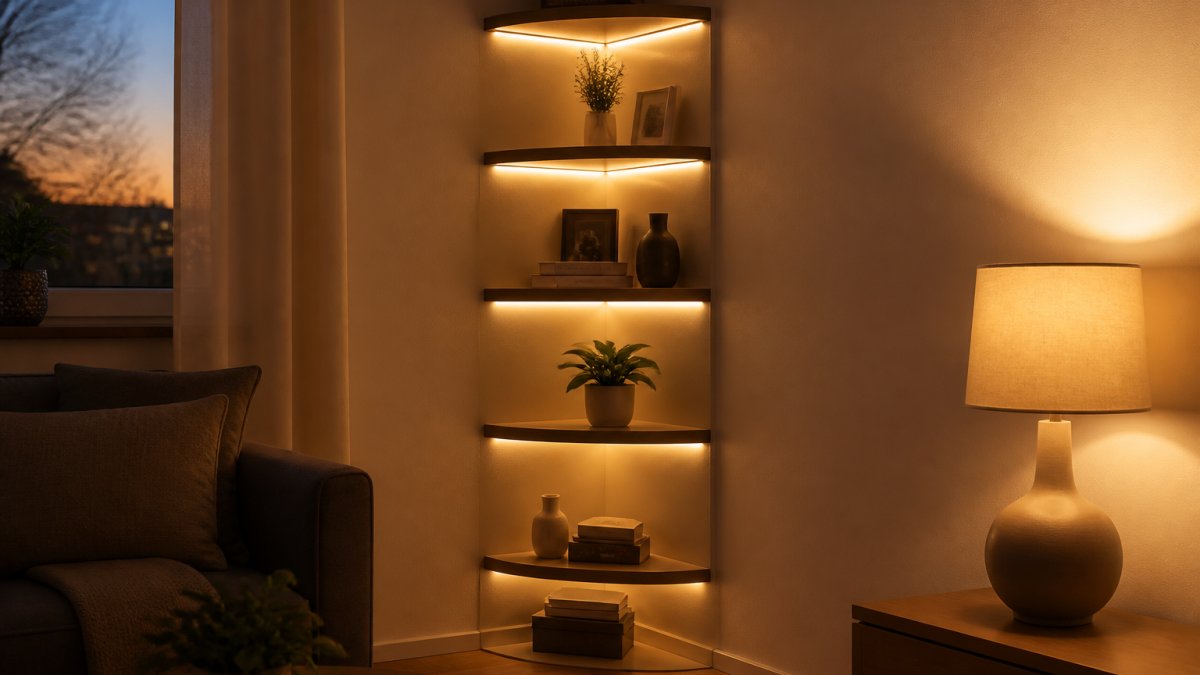
- Layer a dimmable table lamp with a strip-lit shelf for a warm pool of light plus a soft background wash.
- Under-cabinet strips put light directly on the worktop where you chop and prep.
- LEDs convert most power into light rather than heat, so they draw less electricity for the same brightness.
- Blue-rich light around 5000K and above suppresses melatonin, so shift to warm dimmed light before bed.
- Clean and dry the surface before sticking a strip, and test the full run before committing.
Table of Contents
- Why LED Lighting Ideas and Benefits Matter for Your Home
- 7 Practical LED Lighting Ideas for Every Room
- The Core Benefits of LED Lighting: Efficiency, Lifespan and Safety
- Energy Efficient Lighting Solutions That Cut Your Bills
- LED Strip Light Installation Tips for a Clean Finish
- The Best LED Colour Temperatures for Home Comfort
- Choosing Your LED Lighting Setup from NEXZI
- Frequently Asked Questions
Why LED Lighting Ideas and Benefits Matter for Your Home
LED lighting ideas and benefits have moved from a niche upgrade to a standard part of how homes are lit, and the reasons are practical rather than fashionable.
The core appeal is straightforward. LED lighting is a type of lighting that produces light using light-emitting diodes, converting most of the electricity it draws into light rather than heat.
Below, we cover the room-by-room ideas, the benefits that matter, and how to choose the right colour temperature for comfort.
7 Practical LED Lighting Ideas for Every Room
Here are seven LED lighting ideas that cover the whole home, from the hallway you pass through to the corner you want to show off.
- Layered living room glow. Combine a dimmable table lamp with a strip-lit shelf so the room has both a pool of warm light and a soft background wash.
- Bedside reading light. A compact adjustable lamp clipped or mounted near the bed gives you focused light for reading without waking anyone else.
- Hallway motion lighting. A motion-sensor wall light can switch on as you pass, which is useful on stairs and in dark corridors.
- Kitchen task lighting. Under-cabinet strips put light directly on the worktop where you chop and prep.
- Bathroom mirror light. A small fill light near the mirror improves visibility for shaving and makeup without a full refit.
- Display shelf accent. A five-tier corner shelf with integrated dimmable strips turns an unused corner into a feature.
- Mood lighting for evenings. A projection or colour-changing lamp gives you a low, warm setting for winding down.
Ambient, Task and Accent Lighting Explained
Ambient lighting is the general background light that lets you move around a room safely. Task lighting is focused light for a specific job, such as reading or cooking. Accent lighting is decorative light that highlights a feature, like a shelf or a picture.
Most rooms feel flat because they rely on ambient light alone. For task lighting, an adjustable option such as the GGbingo Adjustable Magnetic LED Reading & Fill Light lets you change brightness and colour temperature to suit reading or desk work.

The Core Benefits of LED Lighting: Efficiency, Lifespan and Safety
The main benefits of LED lighting are lower energy use, a long lifespan, cooler operation, and, increasingly, a measurable effect on how a room feels to live in.
Lifespan is the second big gain. LED fittings are generally designed to run for many thousands of hours, which usually means fewer bulb changes over time. LEDs also run cooler than many older bulbs and have no fragile filament to break from a knock.
The Health Angle Most Guides Skip
Beyond cost and convenience, the colour temperature of your LED lighting influences how your body reads the time of day. Light in the blue-rich end of the spectrum (roughly 5000K and above) suppresses melatonin, the hormone that signals wind-down, which is why bright cool-white light late in the evening can make it harder to fall asleep. Warmer light around 2700K to 3000K has far less of that effect.
Maintenance and Troubleshooting: What Actually Goes Wrong
LEDs are reliable, but they are not maintenance-free, and most guides gloss over the failure modes. Common issues with LED lighting include:
- Flicker. Usually caused by an incompatible dimmer switch. Older leading-edge dimmers often do not work cleanly with LED drivers; a trailing-edge or LED-compatible dimmer usually resolves it. Flicker can also come from a failing driver.
- Driver failure before the LEDs. The electronic driver is the weakest link in a cheap fitting. If a lamp stops working entirely, the driver is the first thing to suspect, not the diodes.
- Premature dimming or colour shift. Poor heat management shortens LED life. Fittings with adequate ventilation and metal heat-sinking last noticeably longer than sealed plastic units.
A common pattern is that a fitting which flickers on day one will keep flickering; test dimming compatibility before you commit to a whole-room swap. Buy from a seller that stands behind its product, and keep your receipts.
Sustainability Beyond the Energy Bill
Energy efficiency is only part of the environmental story. LEDs contain no mercury, unlike compact fluorescent lamps, which makes them safer to handle and simpler to dispose of. They also last long enough that the manufacturing footprint is spread over many years of use. The trade-off is that LEDs contain electronic components and small amounts of metals that should go to a household waste recycling centre rather than general waste, so check your local council's guidance for small electricals before binning a failed fitting.
Energy Efficient Lighting Solutions That Cut Your Bills
Energy efficient lighting solutions work by cutting the wattage needed for a given brightness. A modern LED bulb typically uses a fraction of the wattage of an equivalent incandescent bulb, and because you pay for the electricity you draw, that difference shows up on every bill.
There is more to it than swapping bulbs. Rechargeable options such as the Rechargeable RGB Up-and-Down Motion Sensor Wall Light at £9.99 can avoid the need for wiring a new circuit.

How Much Can You Really Save?
Savings depend on your tariff, the number of fittings and how long each one runs, so treat any single figure with caution. The reliable way to estimate is to compare wattage: check the wattage on your current bulb, note the wattage of the LED replacement, and multiply the difference by your hours of use and your electricity rate.
Use this quick formula:
- Annual saving = (old wattage − LED wattage) ÷ 1000 × hours used per year × your pence-per-kWh rate
Run it once for your most-used room and you will see whether a wider swap is worth it. For most homes, the lights that run longest, such as kitchen and living room fittings, pay back fastest.
GGbingo Adjustable Magnetic LED Reading & Fill Light →
LED Strip Light Installation Tips for a Clean Finish
A clean strip-light finish comes down to preparation: measure the run, clean the surface, and plan where the cable and driver will sit before you peel any backing.
Practical tips that make the difference:
- Clean and dry the surface first. Dust and grease stop the adhesive from holding.
- Test the full run before sticking. Lay the strip out and power it up to check for dead sections.
- Keep LED drivers ventilated. Do not bury a driver behind a sealed panel where heat builds up.
- Use connectors, not solder, for joins. They are more reliable and easier to replace.
If you want a tidy result without building a strip run from scratch, the 5-Tier Corner Display Shelf with Dimmable LED Lighting at £49.99 comes with integrated dimmable strips already fitted, so the lighting and the shelving arrive as one unit.

Watch out: sticking a strip to a dusty or freshly painted surface is the most common reason it peels within weeks. Let paint cure fully and wipe the surface down before applying.
The Best LED Colour Temperatures for Home Comfort
The best LED colour temperature for most living spaces is around 2700K to 3000K, a warm white that feels close to traditional lighting. Colour temperature is measured in Kelvin: lower numbers give a warmer, yellower light, and higher numbers give a cooler, bluer light. For reference, 2700K to 3000K suits living rooms and bedrooms, 3500K to 4000K suits kitchens and bathrooms, and 5000K and above suits garages and detailed work.
Why Colour Temperature Affects Sleep and Focus
This is the part most buying guides leave out. The Kelvin rating is not just an aesthetic choice, it describes the spectral balance of the light, and cooler light contains more blue wavelengths. Blue-rich light signals daytime to the body and suppresses melatonin, the hormone that helps you wind down. That is useful in the morning and for focused work, and unhelpful in the hour before sleep.
CRI, Dimming and the Trade-offs That Matter
Colour rendering index, or CRI, measures how faithfully a light shows true colours, and a higher CRI makes fabrics, food and skin tones look natural.
Two trade-offs are worth knowing before you buy:
- Dimming changes the feel, not just the brightness. Many LEDs dim by reducing current, which can shift the colour slightly warmer, often a pleasant effect in the evening, but worth checking on a sample before committing.
- High CRI and high efficiency can pull against each other. A very high-CRI LED may deliver slightly fewer lumens per watt than a standard one, so choose based on the room's job rather than chasing the highest number on both.
For evening mood, a colour-changing lamp lets you shift the feel of a room without changing fittings. The Rechargeable RGB Projection Lamp - Aurora or Water Ripple at £19.99 offers 16 selectable colours, adjustable brightness and both Aurora and Water Ripple effects.
Here is how the article matches Kelvin ranges to rooms and tasks.
| Colour temperature | Best for | Note |
|---|---|---|
| 2700K to 3000K | Living rooms and bedrooms | Warm white, close to traditional lighting |
| 3500K to 4000K | Kitchens and bathrooms | 4000K suits kitchens and home offices |
| 5000K and above | Garages and detailed work | Blue-rich light suppresses melatonin |
| CRI 80 or above | Living areas | Higher CRI shows true colours |
| CRI 90 or above | Bathroom mirror or kitchen worktop | Where colour judgement matters |
Choosing Your LED Lighting Setup from NEXZI
Start with the room you use most, decide whether it needs ambient, task or accent light, then pick one fitting to test before you commit to a whole-home change.
At NEXZI, we keep the buying side simple. Free shipping is available, payments are secured with 100% SSL encryption, and our 30-day free returns policy means you can send something back if it does not suit the room.
Browse the collection of novelty LED lighting to see the range.
Frequently Asked Questions
How much energy can I save by switching to LED lighting?
LED bulbs generally use less energy than incandescent or halogen equivalents, converting more of their energy into light rather than heat. The exact saving depends on your current bulbs, usage hours and your electricity tariff.
Do LED lights last longer than incandescent or halogen bulbs?
Yes. LED bulbs generally last considerably longer than traditional incandescent bulbs, which means fewer replacements and lower long-term costs. It also makes LEDs a practical choice for hard-to-reach fittings such as ceiling lights and integrated shelf lighting.
Are there any downsides to using LED lighting in the home?
The main considerations are choosing the right colour temperature and ensuring compatibility with existing dimmer switches. Some early LEDs had a reputation for harsh light or flicker, but modern options are available in warm tones and flicker-free designs. Buying from a reputable source and checking the colour rendering index (CRI) helps you avoid poor-quality light.
What are the best LED colour temperatures for different rooms?
For living rooms and bedrooms, warm white (around 2700K to 3000K) creates a relaxing atmosphere. Kitchens and home offices often suit cooler white (4000K) for task lighting. Bathrooms can use either, depending on whether you want a spa-like feel or bright clarity.
Lighting a whole home at once is where most people overspend and end up with fittings that do not match the space. We would start with one room, get the colour temperature and layering right, then build out from there. NEXZI stocks rechargeable and plug-in LED options with free shipping, 100% SSL-secured payments and a 30-day free returns policy, so you can try a piece in your own room before buying more. Get started with NEXZI and light your home one considered room at a time.


