

Last Updated: October 25, 2026
Quick Summary
To organize messy car interiors, remove everything from your seats, floor, boot, and compartments, then sort items into keep, relocate, and discard groups. Clean your car thoroughly before setting up smart storage solutions like bins, seat-back organizers, and designated spots for essentials to maintain a tidy, functional space.
- Remove all items and assess clutter patterns to understand which areas collect the most mess.
- Sort everything into three groups: keep items that belong in your car, relocate items that go home, and discard broken or expired items.
- Use storage bins with secure lids and clear containers so you can see contents without opening them.
- Maintain your organized car with a two-minute daily reset, ten-minute weekly tidy, and thirty-minute monthly deep clean.
- Keep emergency supplies, phone chargers, tissues, and first-aid kits in designated spots like the glove compartment and centre console.
Table of Contents
- Step 1: Remove Everything and Assess the Clutter
- Step 2: Sort Items into Keep, Relocate, and Discard Groups
- Step 3: Clean and Sanitize Your Car Interior
- Car Interior Storage Ideas for Everyday Essentials
- Car Essentials Checklist: What to Keep Accessible
- How to Keep Your Car Tidy: Building a Maintenance Habit
- Organization for Different Drivers and Vehicle Uses
- Frequently Asked Questions
Step 1: Remove Everything and Assess the Clutter
The first step to organize messy car interiors is to remove everything. Pull out every item from your seats, floor, boot, glove compartment, and centre console. Lay everything on a clean surface so you can see what you're working with.
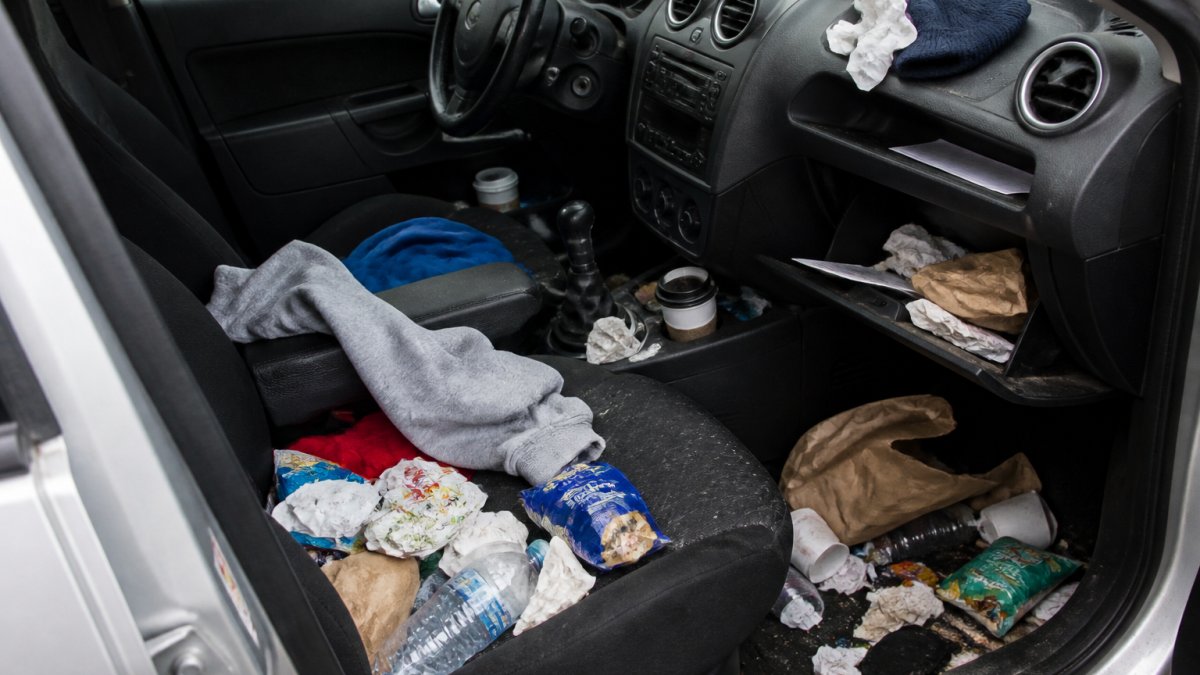
You'll likely find forgotten receipts, snacks, loose change, and items that migrated into odd corners. Don't judge yourself, most car owners let clutter build up gradually without noticing.
Once everything is out, assess the damage with fresh eyes. Notice which areas collect the most mess, the floor under seats, door pockets, the back seat.
Step 2: Sort Items into Keep, Relocate, and Discard Groups
Now sort everything into three clear groups: keep, relocate, and discard.
Keep items belong in your car: phone chargers, emergency supplies, water bottles, or work documents for your commute.
Relocate items don't belong in your car, they go back to your home, office, or garage. Old receipts, finished books, or gym clothes that should be washed at home all fall here. Be honest about what you actually use while driving.
Discard items are trash or broken things: expired snacks, broken pens, old parking tickets, damaged sunglasses, worn-out wipes. This category feels good, you're removing dead weight.
A common mistake is keeping "just in case" items, a broken umbrella, a dead phone charger, a half-empty hand sanitizer. These take up space and create visual clutter.
Be ruthless with the discard pile. Your car will feel lighter immediately.
Step 3: Clean and Sanitize Your Car Interior
Before you put anything back, clean your car interior thoroughly. This is the step most guides skip, but it's essential.
Start with a vacuum. Get under the seats, between cushions, and in corners where dust and debris hide.
Next, wipe down all surfaces with a damp microfibre cloth, dashboard, steering wheel, door handles, centre console. These high-touch areas collect bacteria. For extra sanitization, use a disinfectant wipe or a cloth dampened with diluted cleaning solution.
Don't forget the windows and mirrors. Clean glass improves visibility and makes your car feel brighter and more organized.
Pay attention to the boot: wipe down the floor and walls, and vacuum the carpet thoroughly or wash the boot mat if you have one.
This cleaning step transforms your car, you're not just organizing but creating a fresh, hygienic space that feels good to drive in.
Car Interior Storage Ideas for Everyday Essentials
Once your car is clean and you've sorted your items, it's time to set up smart storage. The goal is keeping essential items accessible while minimizing loose clutter.
Using Bins and Containers
Storage bins and containers are your best friends for car organization. You can find cars with storage solutions and accessories designed to fit your vehicle's specific spaces and needs.
Look for containers with secure lids so items don't slide when you brake or turn corners. Clear containers let you see inside without opening them, saving time when searching for something.
Quality containers keep items organized for months without falling apart, an important consideration if you've had cheap organizers fail before.
Label your containers with a label maker or waterproof stickers. This takes five minutes and saves you from opening every container when looking for something specific.
Seat-Back Organizers and Backseat Solutions
Seat-back organizers hang on the back of front seats and create instant storage for the people sitting behind you. These work brilliantly for families or anyone who regularly has passengers.
Seat-back organizers typically have multiple pockets for tissues, wipes, snacks, entertainment items, or small first-aid supplies, keeping essentials within arm's reach without floor clutter.
For backseat organization, consider a backseat organizer or cargo net. These prevent items from sliding during turns or sudden stops and create visual separation, your car feels more organized when things are contained.
If you have children, backseat organizers are essential, they hold colouring books, tablets, activity supplies, and snacks, keeping kids entertained and avoiding chaos scattered across the back seat.
Glove Compartment and Centre Console Organization
Your glove compartment and centre console are prime real estate. Use them strategically.
In your glove compartment, keep regularly needed documents, vehicle registration, insurance paperwork, MOT certificate, in a small folder or envelope. Add a small first-aid kit, torch, and multi-tool as emergency essentials.
The centre console is perfect for frequently accessed items: phone charger, small hand sanitizer, lip balm, or a pen. Don't overstuff it, it fills up quickly and becomes chaotic.
Use small dividers or containers inside your centre console to stop items rolling around and rattling over bumps.
Car Essentials Checklist: What to Keep Accessible
Knowing what to keep accessible is half the battle. Here's what most drivers benefit from keeping in their car at all times.
Emergency and safety items:
- First-aid kit with plasters, pain relief tablets, and antiseptic wipes
- Torch with spare batteries
- Jumper cables or a portable jump starter
- Spare fuses and a multi-tool
- High-visibility vest and reflective triangles
- Spare tyre (check it's properly inflated), jack, and wheel brace
Comfort and convenience items:
- Phone charger (car charger or portable power bank)
- Tissues and wet wipes
- Hand sanitizer
- Sunglasses
- Lip balm and hand cream
- Reusable water bottle
- Mints or gum
Travel and navigation:
- Phone holder or dash mount
- USB cable for music or navigation
- Pen and small notepad
- Parking change if you use pay-and-display
Family items (if applicable):
- Colouring books and pencils for children
- Entertainment tablet or portable device
- Snack container with non-perishable snacks
- Wipes for sticky hands
- Spare clothing layers
Keep these items in designated spots: phone charger in the centre console, first-aid kit in the glove compartment, tissues and wipes in the seat-back organizer. This consistency means you know exactly where things are when you need them.
How to Keep Your Car Tidy: Building a Maintenance Habit
To organize messy car spaces is one thing. Keeping it tidy is another. The key is building a simple maintenance habit that fits your actual schedule, not an idealized one.
Daily reset (two minutes). Before you lock the car for the night, do a quick sweep. Remove any rubbish from the day, receipts, snack wrappers, coffee cups. Put loose items back in their designated containers.
Weekly tidy (ten minutes). Choose a fixed day and time, Sunday evening works for many. Spend ten minutes on a deeper pass: vacuum the driver's footwell if needed, wipe the centre console and door handles, check containers haven't overflowed, and empty the boot rubbish bin. This stops the gradual accumulation that turns a tidy car messy.
Monthly deep clean (thirty minutes). Once a month, shake out floor mats, vacuum under seats and in the boot, and wipe the dashboard and steering wheel with interior cleaner.
Tailor the routine to your usage. Daily commuters with children may need a backseat check for snacks and toys in the daily reset.
Keep a small bin or bag in your boot specifically for rubbish. This prevents rubbish from accumulating on the floor or seats. When the bag fills up, empty it at a bin. This single habit makes an enormous difference.
Review your system quarterly. Every three months, pull everything out again and reassess. Has your system worked? Are you using all your containers? Do you need to adjust anything?
Find what fits your schedule and stick with it, the most effective routine is the one you'll actually do.
A tiered maintenance routine keeps your car organized without overwhelming your schedule.
| Maintenance Level | Time Required | What to Do |
|---|---|---|
| Daily reset | Two minutes | Remove rubbish, return loose items to containers |
| Weekly tidy | Ten minutes | Vacuum footwell, wipe console, check containers |
| Monthly deep clean | Thirty minutes | Shake mats, vacuum under seats, check emergency kit |
| Quarterly review | Variable | Pull everything out and reassess your system |
Organization for Different Drivers and Vehicle Uses
Your car organization needs depend on how you use your vehicle. A daily commuter has different needs than someone who uses their car for road trips or family transport.
Safety and visibility first. Whatever you store and wherever you put it, you must keep airbags, pedals, windows, mirrors, and your driver sightlines unobstructed. In the UK, it is an offence under the Road Vehicles (Construction and Use) Regulations 1986 to use a vehicle in a condition that could cause danger or injury, this includes having an obstructed view (View to the front and windscreen obscuration).
Daily commuters benefit from a minimal setup: phone charger, mints, tissues, and a pen. Your commute is short and predictable, so overloading with "just in case" items creates unnecessary clutter.
Family drivers need more capacity but must still prioritise safety. Seat-back organizers, snack containers, and entertainment supplies become essential.
Road trip drivers need different preparation. Keep a cooler for drinks and snacks in the boot, secured with a cargo net.
Sports enthusiasts and gym-goers might keep a separate bag in the boot for post-workout items.
Delivery drivers or people who transport goods need boot organization systems. Shelving units or cargo organizers keep items separated and accessible.
Assess how you actually use your car. What items do you need every single day? What do you add for specific trips? Build your organization system around your real patterns, not an imaginary ideal. And always prioritise safety: a tidy car is only truly organised if it is also safe to drive.
Frequently Asked Questions
How do I declutter a messy car interior quickly?
Remove everything from your vehicle and sort items into three groups: keep, relocate, and discard. Start with the most visible areas (seats, floor, dashboard) and work systematically through the boot and storage compartments. Set a timer for 2-3 hours to maintain focus. Clean surfaces as you go, then return only essential items to designated storage spots using bins or organizers. This focused approach prevents the task from feeling overwhelming.
What car essentials should I keep accessible at all times?
Keep first-aid supplies, tissues, wipes, emergency contact information, and roadside tools within easy reach. Store snacks and drinks in a designated container if you travel frequently. Include a phone charger, pen and paper, and any medications you might need. Use your glove compartment for documents and insurance details, and keep the centre console for items you access regularly. Everything else should go in the boot or a dedicated storage bin.
How can I maintain a tidy car after organizing it?
Perform a 10-minute tidy-up once a week, removing loose items and returning things to their designated places. After each journey, remove any rubbish or items that don't belong. Wipe down surfaces monthly to prevent dust buildup. Rotate seasonal items (winter clothing, sunscreen) as needed. This regular maintenance habit keeps clutter from accumulating and preserves your organization system long-term.
What storage solutions work best for different car uses?
For family travel, use backseat organizers for children's entertainment and seat-back pockets for snacks and wipes. Commuters benefit from centre console organizers for work essentials and phone chargers. Active drivers should store fitness gear and hydration supplies in collapsible bins that fit the boot. Choose storage that matches your vehicle's layout and your daily needs, avoid overcrowding, which compromises safety and visibility.


